
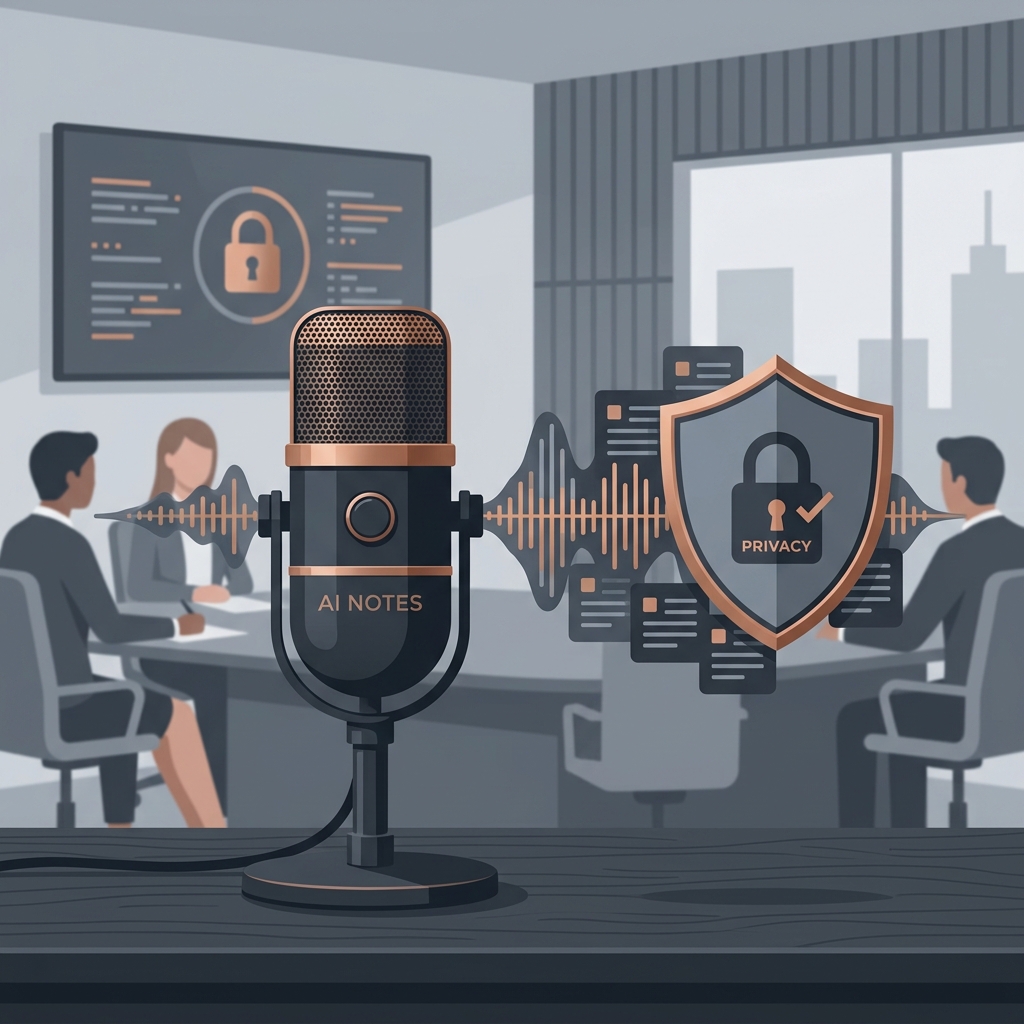
It has become an all-too-familiar boardroom occurrence. You join a video conference, and within seconds, a silent, uninvited "recording assistant" or virtual recording bot joins the participant list. The host might offer a brief apology, or the bot might slip in unnoticed, silently recording, transcribing, and compiling meeting data.
While the convenience of automated summaries is undeniable, the proliferation of these meeting bots represents a major threat to corporate confidentiality and client trust.
"A recording bot doesn't just join your call — it acts as a corporate spy, piping your private strategic conversations and sensitive client disclosures to central cloud databases."
For professionals working with highly confidential information—including lawyers, management consultants, researchers, and healthcare providers—inviting a third-party recording bot into a consultation or brainstorm is a direct compliance exposure.
1. The Problem with Meeting Bots
Meeting bots rely entirely on cloud-based processing pipelines. To generate notes, the bot intercepts the digital audio feed of the call, transmits it across public networks, and stores it in a remote, multi-tenant server cluster.
This centralization introduces three distinct vulnerabilities:
- Disrupted Client trust: Clients share their most sensitive strategies and trade secrets under strict non-disclosure agreements. Seeing a third-party bot log their words can instantly damage client confidence.
- Compliance Violations: In regulated spaces like healthcare (HIPAA) or finance, routing patient/client communications to unverified cloud processors can constitute a major compliance failure.
- Systemic Data Breaches: Cloud databases are prime targets. If a vendor's centralized repository is breached, thousands of hours of highly confidential corporate conversations are exposed in plain text.
2. The Local-First Alternative: On-Device Processing
To solve this problem, modern workspace engineering has shifted away from external web integrations toward native, hardware-isolated architectures.
Instead of inviting a bot to the call, the intelligence is brought directly to your local computer. When using an on-device workflow, meeting audio is captured locally through your Mac's native microphone systems, and transcribed inside secure, sandboxed process memory.
No Central Servers, Ever
On-device transcription engines convert speech to text completely locally. The audio recording never touches the internet, never passes through third-party APIs, and cannot be intercepted by external entities.
3. Native macOS Integration & Speaker Identification
Running these heavy audio transcription tasks locally requires strict system integration. By leveraging macOS frameworks and native hardware acceleration, modern clients execute transcription and speaker diarization (identifying who spoke when) with incredible speed and minimal energy consumption.
Furthermore, native desktop apps can sync directly with local macOS calendar databases (using EventKit) to pair transcript summaries with specific calendar events—without exposing your calendar credentials to a cloud model host.
Conclusion: Restoring Trust in the Workplace
Automated meeting notes should never require compromising professional ethics or data boundaries. By choosing local-first voice processing, you can enjoy high-fidelity transcription, clear speaker identification, and comprehensive summaries while ensuring that your client disclosures and proprietary brainstorms remain 100% private and securely on your Mac.